
What is the production rate of die casting?
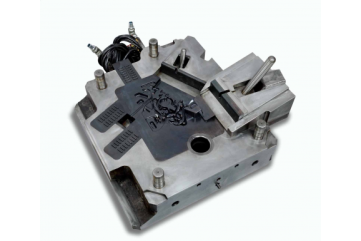
The production rate of die casting can vary significantly depending on several factors, including the size and complexity of the parts being cast, the type of die casting process used, the equipment and technology employed, and the skill and efficiency of the operators. Die casting is a manufacturing process that involves injecting molten metal into a mold cavity under high pressure to produce complex and detailed parts with a high degree of dimensional accuracy. There are two primary types of die casting processes: cold chamber and hot chamber die casting.
Cold Chamber Die Casting: In this process, the metal is melted in a separate furnace before being ladled or injected into the die casting machine. This method is typically used for casting metals with higher melting points, such as aluminum, magnesium, and copper alloys. Cold chamber die casting is generally slower than hot chamber die casting due to the additional step of melting the metal in a separate furnace. Production rates can vary from a few parts per minute to around 100 parts per hour, depending on the part’s complexity and size.
Hot Chamber Die Casting: In hot chamber die casting, the metal is melted within the die casting machine itself. This process is more suitable for casting materials with lower melting points, such as zinc and some magnesium alloys. Hot chamber die casting is generally faster than cold chamber die casting because it eliminates the need for a separate melting furnace. Production rates can range from a few hundred parts per hour to over a thousand parts per hour, depending on the specific machine and part being produced.
Other factors that can affect the production rate of die casting include:
* Machine size and capacity: Larger machines can handle larger and more complex parts, which may result in higher production rates.
* Tooling design: Well-designed dies and molds can improve cycle times and production efficiency.
* Automation: The use of automated systems for loading, unloading, and quality control can increase production rates.
* Operator skill and experience: Experienced operators can optimize the process for efficiency and quality.
Overall, the production rate of die casting can vary widely, and it is essential to consider the specific requirements of your project and the capabilities of the equipment and materials being used to determine the expected production rate for your particular application.