
What is the die mold casting process?
The die mold casting process, also known simply as die casting, is a metal casting process that involves forcing molten metal under high pressure into a mold cavity. Here’s a more detailed explanation of the process:
1. Mold Preparation:
– The die (mold) is made of two parts: a fixed half and a movable half.
– The die is preheated and lubricated.
2. Metal Preparation:
– Metal is melted in a furnace to the appropriate temperature.
3. Injection:
– Molten metal is poured into a shot sleeve (in cold chamber machines) or directly into the injection system (in hot chamber machines).
– A plunger forces the molten metal into the die cavity at high speed and pressure.
4. Solidification:
– The metal begins to cool and solidify as soon as it enters the die.
– Cooling is often accelerated by water channels in the die.
5. Ejection:
– Once solidified, the die opens and ejector pins push out the finished part.
6. Trimming and Finishing:
– Excess metal is trimmed off, and any necessary finishing operations are performed.
Key characteristics of die mold casting:
– High production speeds
– Ability to produce complex shapes
– Good dimensional accuracy and surface finish
– Suitable for non-ferrous metals like aluminum, zinc, magnesium, and copper alloys
– Cost-effective for high-volume production
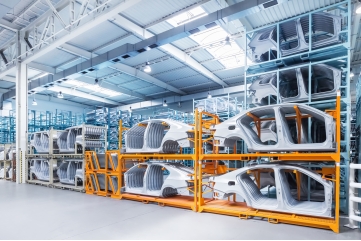
Die mold casting is widely used in automotive, electronics, and consumer goods industries for producing parts that require high precision and consistency in large quantities.