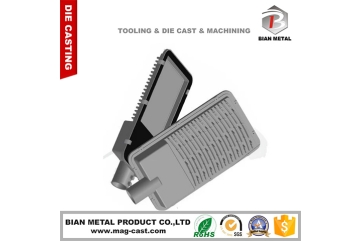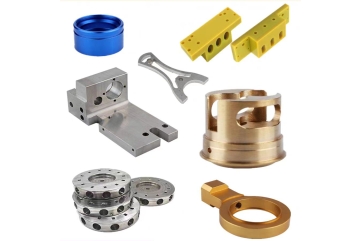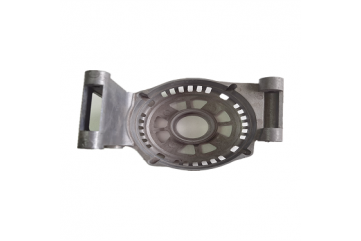

What is a die casting?
Die casting is a metal casting process that involves forcing molten metal into a mold cavity under high pressure. This process is commonly used to produce a wide variety of parts and components with high precision and surface finish. Die casting is often employed in the production of metal parts used in various industries, including automotive, aerospace, electronics, and more.
The die casting process typically involves the following steps:
Mold Preparation: Two mold halves, the “die,” are prepared. These molds are typically made of steel and are precision-machined to create the desired shape of the final part. The two halves fit together precisely to create a closed cavity.
Injection: The molten metal, often an alloy of aluminum, zinc, magnesium, or other metals, is heated to a specific temperature and then injected into the closed mold cavity at high pressure. The pressure is maintained until the metal solidifies.
Cooling: The metal inside the mold cools and solidifies, taking the shape of the mold cavity. Cooling can be accelerated with the use of cooling channels within the die.
Ejection: Once the metal has solidified and the part has taken shape, the mold halves are separated, and the newly formed part is ejected from the mold.
Trimming and Finishing: The ejected part may have excess material, such as flash or sprues, which is trimmed and removed. Additional finishing processes, such as machining, deburring, or surface treatments, can be performed to achieve the desired final product.
Die casting offers several advantages, including:
High Precision: Die casting molds can produce highly detailed and intricate parts with tight tolerances.
High Production Rates: It is a fast and efficient process, making it suitable for high-volume production.
Excellent Surface Finish: Die-cast parts often have a smooth and polished surface.
Material Variety: Die casting can be used with a wide range of metals and alloys.
Cost-Effective for Large Runs: It is cost-effective when producing a large number of parts, as the initial tooling costs can be offset by high production rates.
However, die casting may not be suitable for very small or complex parts that require extreme precision. It is also less flexible for low-volume or custom production due to the initial tooling costs. Die casting is a versatile and widely used manufacturing process, and its application depends on the specific requirements of the parts being produced.