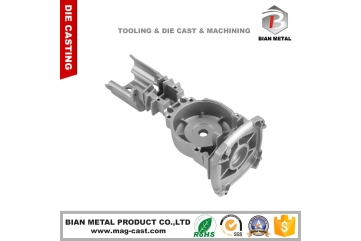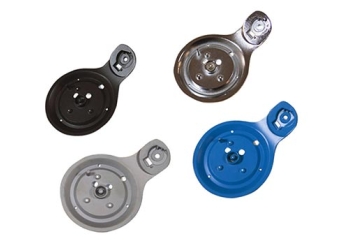

What are the advantages and disadvantages of casting?
Casting is a versatile manufacturing process with several advantages and disadvantages. Here’s an overview of both:
Advantages of Casting:
1. Shape complexity: Can produce complex shapes that would be difficult or impossible with other methods.
2. Size range: Suitable for both small and large parts.
3. Material versatility: Can be used with a wide range of metals and alloys.
4. Cost-effective for large volumes: Once molds are made, it’s economical for high-volume production.
5. Uniform structure: Proper casting techniques can result in a uniform internal structure.
6. Near-net shape production: Reduces the need for extensive machining.
7. Ability to create hollow parts: Especially useful with sand casting.
8. Good for prototyping: Sand casting allows for quick prototypes.
9. Can produce parts with good strength-to-weight ratios.
10. Suitable for both small-scale and mass production.
Disadvantages of Casting:
1. Initial cost: Mold and pattern creation can be expensive, especially for complex parts.
2. Size limitations: Very large parts may be challenging to cast.
3. Surface finish: May require additional finishing operations.
4. Porosity: Some casting methods can result in internal voids or porosity.
5. Dimensional accuracy: Not as precise as some machining processes.
6. Material limitations: Not all materials are suitable for casting.
7. Cooling rates: Uneven cooling can lead to internal stresses or defects.
8. Environmental concerns: Some casting processes produce emissions and waste.
9. Labor intensive: Especially for processes like sand casting.
10. Quality control: Requires careful monitoring to ensure consistent quality.
11. Limited mechanical properties: Cast parts may have lower strength compared to forged or machined parts in some cases.
12. Tooling wear: Molds and dies may wear out over time, requiring replacement.
The choice to use casting depends on factors such as part complexity, production volume, material requirements, and cost considerations. Each specific casting method (e.g., sand casting, die casting, investment casting) has its own set of advantages and disadvantages within these general points.