
Why is die casting used?
Die casting is a popular manufacturing process for several reasons:
High Production Efficiency:
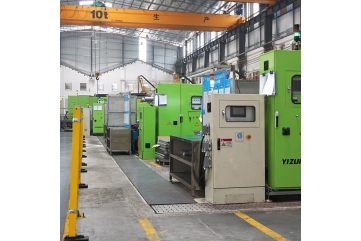
Die casting allows for the rapid production of a large number of castings. The process involves injecting molten metal into a mold under high pressure, which solidifies quickly. This results in a high rate of production compared to other casting methods.
Precision and Accuracy:
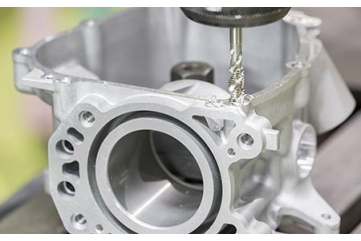
Die casting can produce parts with tight tolerances and high dimensional accuracy. This makes it ideal for components that require precision, such as automotive and aerospace parts.
Complex Geometries:
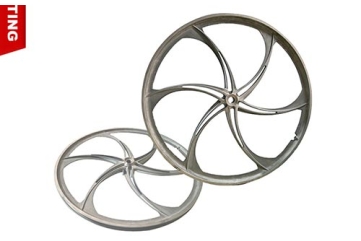
Die casting is capable of producing complex shapes that would be difficult or impossible to achieve with other manufacturing processes. Intricate designs with fine details can be cast in a single operation.
Smooth Surface Finish:
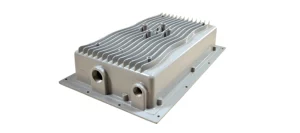
The process results in parts with smooth surfaces and fine details, reducing the need for additional machining or finishing operations. This can save time and reduce costs.
Material Variety:
A variety of metals can be used in die casting, including aluminum, zinc, magnesium, and copper. Each of these metals offers different properties, allowing manufacturers to choose the best material for the specific application.
Strength and Durability:
Die cast parts are typically strong and durable. The high-pressure injection process creates dense, uniform products with good mechanical properties.
Cost-Effectiveness for High Volume Production:
While the initial cost of die casting molds (dies) can be high, the process becomes cost-effective for large production runs. The ability to produce a high volume of parts quickly offsets the initial tooling investment.
Reduced Material Waste:
Die casting is a highly efficient process with minimal waste. Excess metal can often be recycled, further reducing material costs and environmental impact.
Automation and Consistency:
Die casting can be easily automated, which ensures consistency and repeatability in the production process. This leads to higher quality control and fewer defects.
These advantages make die casting a preferred method for producing a wide range of products, particularly in industries where high precision, strength, and efficiency are critical.